Laws
Does the ADA Cover Emotional Support Animals?
The ADA protects trained service dogs in public places. An emotional support animal falls under different laws: one for your home, one for flights, and a case-by-case request at work.

On this page
Mostly no. The ADA's rules for shops, restaurants, hotels and other public places cover only dogs that are individually trained to do work or tasks for a person with a disability, and the rules say plainly that emotional support does not count as a task. An emotional support animal is covered by different laws in different places: one for your home, one for flights, and a case-by-case request at work. This guide sorts out which law applies where, with the lines from the rules themselves.
The law that covers your emotional support animal depends on where you are standing
At home
The Fair Housing Act covers renting and buying. Most emotional support animal questions are really questions about this law.
In shops and restaurants
The ADA covers service dogs only. An emotional support animal gets no ADA right to go inside.
At work
ADA Title I treats an animal as a reasonable accommodation request, and the employer decides it case by case.
On a plane
A Department of Transportation rule in force since January 11, 2021 lets airlines treat emotional support animals as pets.
| Where you are | Which law applies and what it says |
|---|---|
| A home you rent or buy | Fair Housing Act. The Justice Department's ADA page says housing providers are "obligated to permit, as a reasonable accommodation," animals that "provide emotional support to alleviate a symptom or effect of a disability." HUD's May 2026 memo says its own office now pursues only trained animals. |
| Shops, restaurants, hotels and public places | ADA Titles II and III. Service dogs only. Emotional support or comfort dogs are left out because "providing emotional support or comfort is not a task related to a person's disability." |
| Work | ADA Title I. An employer must make reasonable accommodations unless they cause undue hardship. The Job Accommodation Network notes that nothing in the ADA's rules or EEOC's written guidance addresses emotional support dogs, so each request turns on its facts. |
| A plane | Air Carrier Access Act rule. Since January 11, 2021, airlines may treat emotional support animals as pets. A dog trained to do tasks for a psychiatric disability is still a service animal. |
The ADA defines a service animal as a dog that has been trained to do a job
The Justice Department's rules define a service animal as "any dog that is individually trained to do work or perform tasks for the benefit of an individual with a disability, including a physical, sensory, psychiatric, intellectual, or other mental disability." They add that "other species of animals, whether wild or domestic, trained or untrained, are not service animals," and that "the provision of emotional support, well-being, comfort, or companionship" does not count as work or tasks. That one definition (28 CFR 36.104, with a matching one for governments in 35.104) is the reason the ADA does not carry over to emotional support animals.
1 species
Only dogs count as service animals under the ADA's public-place rules.
2 questions
All that staff may ask when it is not obvious what a service dog does.
0 papers
The ADA does not require a service dog to be certified, and covered businesses may not require proof that it was certified, trained or licensed.
Notice what is missing: no federal registry exists for service animals or for emotional support animals. The ADA tells businesses they may not demand a registration or certificate for a service dog, and none of the housing, work or flight rules below turns on a registration. An ESA Card is a photo ID card and certificate for your animal; the document a landlord or employer asks to see is a letter from a licensed professional.

Staff at a shop may ask two questions, and an emotional support animal has no task to describe
When it is not obvious what a dog does, staff may ask only: "Is the dog a service animal required because of a disability?" and "What work or task has the dog been trained to perform?" An emotional support animal's honest answer to the second question is that it has not been trained to perform a task, which is why the ADA gives it no right to enter a place with a no-pets policy. Businesses must let service animals in "even if they have a 'no pets' policy," the Justice Department says, and that is a rule about service animals only.
The Justice Department's FAQ adds one thing that helps: "some State or local governments have laws that allow people to take emotional support animals into public places." The ADA sets a floor, and a state or city can go beyond it. Our state-by-state guides cover the ones that do.
A psychiatric service dog is covered because of the tasks it has learned, not because of a diagnosis
A dog trained for a mental health condition can be a service animal. The Justice Department's own example: "if the dog has been trained to sense that an anxiety attack is about to happen and take a specific action to help avoid the attack or lessen its impact, that would qualify as a service animal. However, if the dog's mere presence provides comfort, that would not be considered a service animal under the ADA." The first dog has a job; the second is an emotional support animal. Our guides on psychiatric service dogs versus emotional support animals and ESAs versus service dogs show how the two compare in practice.
Give your companion the card
Register your emotional support animal in about 3 minutes. Your Certificate of Registration and wallet ESA Card arrive by email as two print-ready PDFs, backed by a 30-day guarantee.
About 3 minutes · Instant digital delivery
30-day money-back guarantee, no questions asked.At work, an emotional support animal is a request the employer decides case by case
ADA Title I makes it discrimination for an employer to fail to make "reasonable accommodations to the known physical or mental limitations of an otherwise qualified individual with a disability" unless the accommodation "would impose an undue hardship." EEOC defines undue hardship as "significant difficulty or expense" and says an employer must assess it "on a case-by-case basis."
Animals at work are not spelled out. The Job Accommodation Network, which advises employers and workers on accommodations, says "there's nothing in the ADA or its regulations that addresses emotional support dogs as workplace accommodations," and nothing in EEOC's written guidance either. EEOC says that when the need for an accommodation is not obvious, "the employer may request documentation of the individual's functional limitations to support the request," and it describes undue hardship as an accommodation that is "unduly extensive, substantial, or disruptive," or that would "fundamentally alter the nature or operation of the business." Put your request in writing, say what the animal does for you during the workday, and ask what the employer needs to see.
On a plane, the rule changed on January 11, 2021
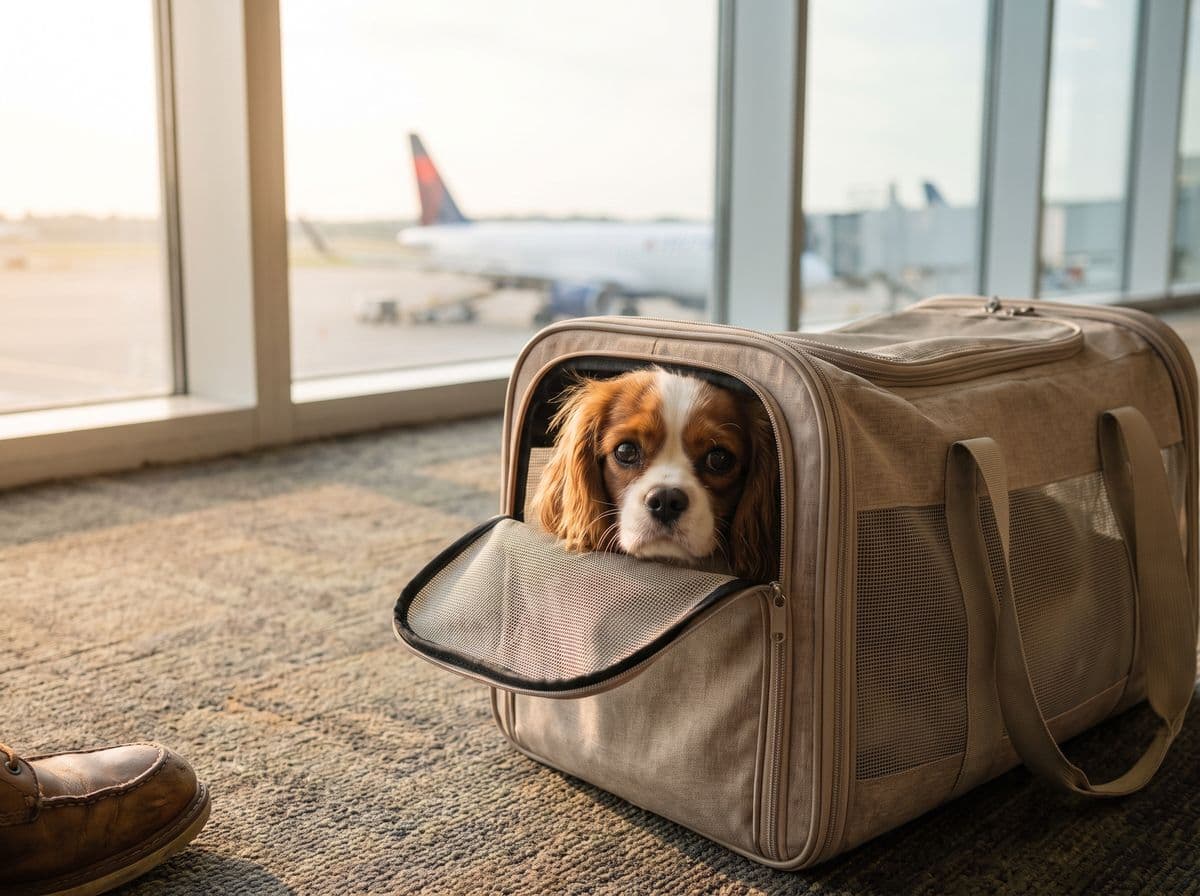
The Department of Transportation's final rule, published December 10, 2020, "defines a service animal as a dog, regardless of breed or type, that is individually trained to do work or perform tasks for the benefit of a qualified individual with a disability," and "allows airlines to recognize emotional support animals as pets, rather than service animals." It took effect January 11, 2021. Airlines "may choose to continue to transport emotional support animals without charge at their discretion," so the airline's own pet policy decides the fee, the carrier size and the paperwork. Check it before you book. A dog trained to do tasks for a psychiatric disability is still a service animal under the rule, and our guide to flying with an emotional support animal shows what the rule lets an airline ask of each.
At home, the Fair Housing Act is the law to read, and HUD changed how it enforces it in 2026
The ADA is not the main housing law; the Fair Housing Act is. It makes it discrimination to refuse "reasonable accommodations in rules, policies, practices, or services, when such accommodations may be necessary to afford such person equal opportunity to use and enjoy a dwelling." The ADA reaches only certain housing, such as public housing run by state and local governments, university housing and emergency shelters.
What changed is HUD's enforcement, not the statute. HUD withdrew its 2013 and 2020 assistance animal notices effective September 17, 2025, and its May 22, 2026 memo says its fair housing office "will find reasonable cause and recommend charges only for those cases involving animals trained to provide disability-related assistance." The Fair Housing Act's text did not change, and the memo leaves your right to go to court within two years alone. The full account is on our page about HUD's emotional support animal rules; the Fair Housing Act guide and the guide to when a landlord can deny an emotional support animal cover the rest. Two common questions have their own pages: whether a landlord can charge a pet deposit, pet rent or a fee, and what applies in Section 8, public housing and assisted living.
You can prepare for each place with one small step
- At home: bring a letter from your own licensed professional and ask for the animal policy in writing.
- At work: ask in writing for a change to the no-animals policy, and say what the animal does for you at work.
- On a flight: read the airline's pet rules before you book, because the airline sets the fee and the carrier size.
- In shops and restaurants: expect the business's own pet policy to apply unless your state or city says otherwise. The ESA laws by state page lists the state rules.
These are the rules and notices every line above comes from
- 28 CFR 36.104 and 28 CFR 35.104: the ADA's definition of a service animal.
- ADA.gov, Service Animals, ADA Requirements: Service Animals and the Service Animals FAQ.
- Department of Transportation final rule, Traveling by Air with Service Animals and 14 CFR 382.3.
- 42 U.S.C. 12112: ADA Title I, reasonable accommodation.
- EEOC: Technical Assistance Manual, Title I and Enforcement Guidance on Reasonable Accommodation and Undue Hardship.
- Job Accommodation Network, emotional support dogs at work.
- 42 U.S.C. 3604: the Fair Housing Act's reasonable accommodation rule.
- Federal Register, HUD withdrawal of FHEO guidance documents (April 6, 2026) and HUD's enforcement memo of May 22, 2026.
Give your companion the card
Register your emotional support animal in about 3 minutes. Your Certificate of Registration and wallet ESA Card arrive by email as two print-ready PDFs, backed by a 30-day guarantee.
About 3 minutes · Instant digital delivery
30-day money-back guarantee, no questions asked.Keep reading