Compared side by side
ESA vs. Service Dog: What's the Difference?
Training. A service dog is individually trained to do a task for a person with a disability, so the ADA lets it go almost anywhere the public can. An emotional support animal helps by being there, needs no training, and is mostly a housing matter, where a letter from your clinician is what landlords look for.
The same holds for emotional support animals and service animals in general: under the ADA, a service animal is a trained dog. Below, every difference side by side, and four taps to see which one you have.

2
questions a store may ask about a service dog
0
certificates, vests or registries the ADA requires
2021
the year emotional support animals began flying as pets
$15k to $40k
for a service dog trained by a program
Side by side
Service dog or emotional support animal, row by row
A psychiatric service dog sits in the service dog column: the law treats it the same way, only the disability differs.
| Difference | Service dogpsychiatric included | Emotional support animal |
|---|---|---|
| What it is | A dog individually trained to do work or perform tasks for a person with a disability. | An animal whose company eases the symptoms of a mental or emotional disability. No tasks needed. |
| Who qualifies | A person with a disability, physical, sensory or psychiatric, whose dog is trained for tasks directly related to it. | A person with a mental or emotional disability whose licensed clinician finds the animal helps. |
| Training | Trained for specific tasks. You may train the dog yourself; no program is required. | None required. A calm, house-trained animal makes every landlord conversation easier. |
| Which animals | Dogs. A trained miniature horse may also be allowed in public places. | Most animals kept at home: dogs, cats, rabbits, birds and more. |
| Paperwork | None. No certificate, registry or letter is required, and staff may not ask for one. | A letter from a licensed health care professional, for housing. See a sample. |
| Housing | Covered by the Fair Housing Act. HUD treats a request for a trained animal as presumptively reasonable. | Courts have long read the Fair Housing Act to cover it, so a no-pets rule makes room for it when you show a clinician's letter.HUD's own office now pursues only cases about trained animals; the Act is unchanged, and state agencies and courts still hear these. |
| Stores, restaurants, hotels | Yes, in every area the public may go, with no pet fees. | Each place sets its own policy, many welcome pets, and some states allow more. Ask ahead. |
| Flights | In the cabin at no charge. The airline may ask for the DOT's form up to 48 hours ahead. | As a pet, under the airline's own pet rules and fees, since January 2021. |
| Work | Can be a reasonable accommodation under the ADA, worked out with your employer. | Can be a reasonable accommodation too, decided case by case. |
| What can be asked | Two questions only: is the dog required because of a disability, and what task is it trained to perform. | When your need is not obvious, a landlord may ask for reliable information showing it: your clinician's letter. |
| Vest or ID | Not required by the ADA, and a vest does not make a dog a service dog. | Optional. Many owners carry an ID card with the animal's photo and a number anyone can check. |
| Cost and time | Programs charge about $15,000 to $40,000 for a dog bred, raised and trained over a year and a half. Nonprofits generally place dogs free or for a small fee, after a wait. | No training to pay for. Our registration kit, with a certificate and an ID card, is $39$59$79$99 and takes about 3 minutes. |
Emotional support animal? Register it: $39$59$79$99 · about 3 minutes
Register My Emotional Support AnimalWhat it is
- Service dog
- A dog individually trained to do work or perform tasks for a person with a disability.
- Emotional support animal
- An animal whose company eases the symptoms of a mental or emotional disability. No tasks needed.
Who qualifies
- Service dog
- A person with a disability, physical, sensory or psychiatric, whose dog is trained for tasks directly related to it.
- Emotional support animal
- A person with a mental or emotional disability whose licensed clinician finds the animal helps.
Training
- Service dog
- Trained for specific tasks. You may train the dog yourself; no program is required.
- Emotional support animal
- None required. A calm, house-trained animal makes every landlord conversation easier.
Which animals
- Service dog
- Dogs. A trained miniature horse may also be allowed in public places.
- Emotional support animal
- Most animals kept at home: dogs, cats, rabbits, birds and more.
Paperwork
- Service dog
- None. No certificate, registry or letter is required, and staff may not ask for one.
- Emotional support animal
- A letter from a licensed health care professional, for housing. See a sample.
Housing
- Service dog
- Covered by the Fair Housing Act. HUD treats a request for a trained animal as presumptively reasonable.
- Emotional support animal
- Courts have long read the Fair Housing Act to cover it, so a no-pets rule makes room for it when you show a clinician's letter.HUD's own office now pursues only cases about trained animals; the Act is unchanged, and state agencies and courts still hear these.
Stores, restaurants, hotels
- Service dog
- Yes, in every area the public may go, with no pet fees.
- Emotional support animal
- Each place sets its own policy, many welcome pets, and some states allow more. Ask ahead.
Flights
- Service dog
- In the cabin at no charge. The airline may ask for the DOT's form up to 48 hours ahead.
- Emotional support animal
- As a pet, under the airline's own pet rules and fees, since January 2021.
Work
- Service dog
- Can be a reasonable accommodation under the ADA, worked out with your employer.
- Emotional support animal
- Can be a reasonable accommodation too, decided case by case.
What can be asked
- Service dog
- Two questions only: is the dog required because of a disability, and what task is it trained to perform.
- Emotional support animal
- When your need is not obvious, a landlord may ask for reliable information showing it: your clinician's letter.
Vest or ID
- Service dog
- Not required by the ADA, and a vest does not make a dog a service dog.
- Emotional support animal
- Optional. Many owners carry an ID card with the animal's photo and a number anyone can check.
Cost and time
- Service dog
- Programs charge about $15,000 to $40,000 for a dog bred, raised and trained over a year and a half. Nonprofits generally place dogs free or for a small fee, after a wait.
- Emotional support animal
- No training to pay for. Our registration kit, with a certificate and an ID card, is $39$59$79$99 and takes about 3 minutes.
Emotional support animal? Register it: $39$59$79$99 · about 3 minutes
Register My Emotional Support AnimalSources: 28 CFR § 36.104 (ADA service animal definition) · ADA.gov: Frequently Asked Questions about Service Animals · HUD and DOJ Joint Statement on Reasonable Accommodations (2004), Q17 and Q18 · 28 CFR § 36.302(c) (service animals in businesses) · 42 U.S.C. § 3604(f)(3)(B) (Fair Housing Act) · HUD FHEO enforcement memo on animal accommodations (May 22, 2026) · DOT final rule, Traveling by Air With Service Animals, 85 FR 79742 (Dec. 10, 2020) · ADA National Network: Service animal or emotional support animal · ADA.gov: Service Animals · NBC News (KFF Health News): Demand for service dogs unleashes a 'Wild West' market
Try it
Which one do you have?
Four taps. It starts on the most common answer and changes as you go.
What kind of animal is it?
How does it help you?
What does it help with?
Where do you need it with you?
What you are describing
An emotional support animal
Comfort is exactly what an emotional support animal gives. At home, with a clinician's letter, that is what it is for.
- Lives with you at home
- No training needed
- A clinician's letter
The letter comes from your own clinician: how the letter works.
What decides it
Training is the whole difference
The ADA's definition lists the kind of work a service dog does. Comfort is not on it: the same rule says emotional support, comfort and companionship are not tasks.
Tasks the ADA names
- Guiding a person who is blind or has low vision
- Alerting a person who is deaf or hard of hearing
- Helping during a seizure
- Alerting to allergens
- Fetching medicine or a phone
- Bracing for balance and stability
- Interrupting impulsive or destructive behavior
The same dog can be either. ADA.gov puts it in one example: a dog whose presence calms you during an anxiety attack is not a service animal, but a dog trained to sense an attack coming and do something specific to stop it or lessen it is.


Flights
Flying in 2026
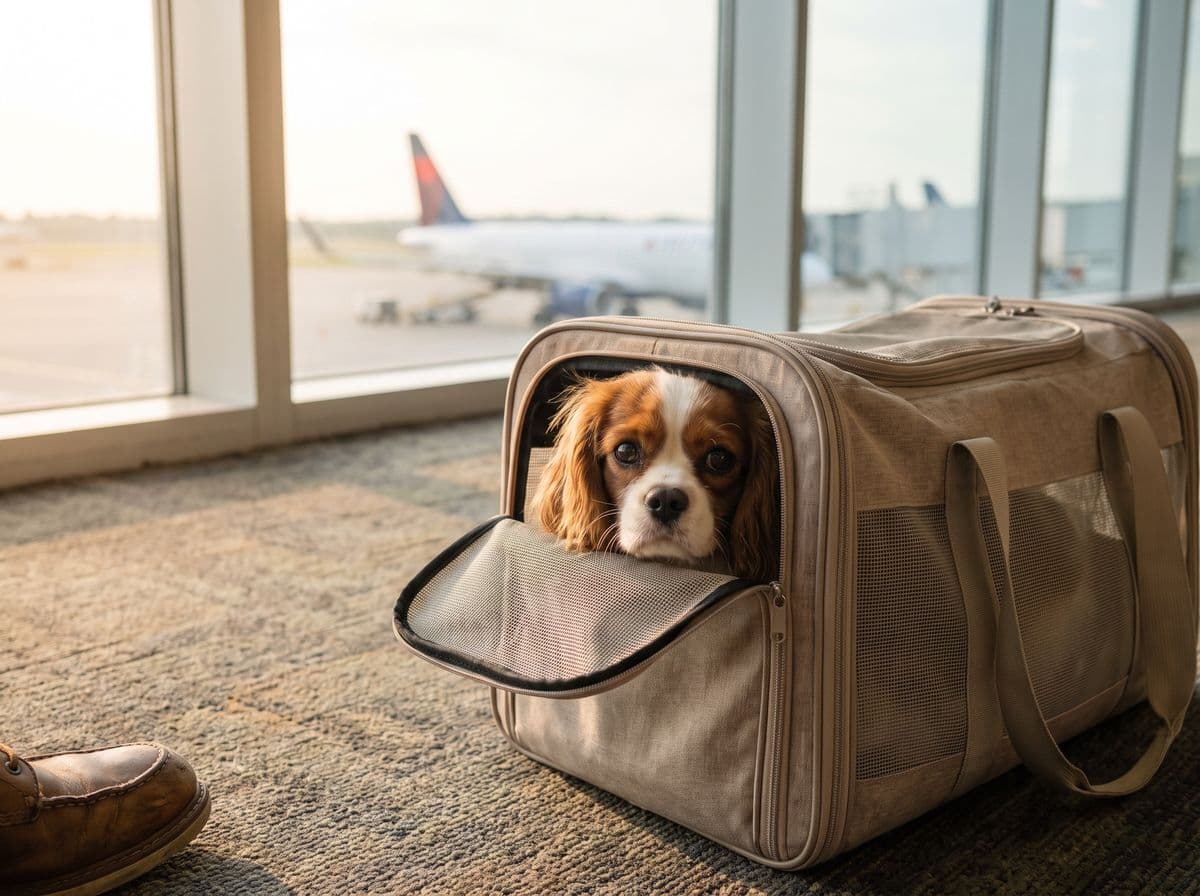
Since January 11, 2021, US airlines may treat emotional support animals as pets. Trained service dogs, psychiatric service dogs included, still fly in the cabin at no charge.
What an airline may ask of a service dog
- The DOT's Service Animal Air Transportation Form, on health, behavior and training.
- Up to 48 hours before the flight, if you booked earlier than that; otherwise at the gate.
- A relief form too, on flights of eight hours or more.
- No more than two service animals per passenger.
- The dog on a leash or harness, and on your lap or in your foot space.
- No ban on a breed or type of dog.
An emotional support animal flies as a pet. Each airline sets its own rules: which animals, the carrier, the fee, and how many pets fit in a cabin. Check yours when you book.
Housing
Housing in 2026: what changed and what did not
Home is where an emotional support animal matters most. HUD changed how its own office enforces the rules; the law itself stayed put.
Sept. 17, 2025
HUD withdrew its 2020 notice on assistance animals in housing.
HUD withdrawal of FHEO-2020-01, 91 FR 17291 (Apr. 6, 2026)May 22, 2026
HUD's fair housing office said it will find cause only where the animal is trained to provide disability-related assistance.
HUD FHEO enforcement memo on animal accommodations (May 22, 2026)Unchanged
The Fair Housing Act itself, your right to sue within two years, and state fair housing laws.
42 U.S.C. § 3604(f)(3)(B) (Fair Housing Act)

What a landlord may ask
When your need is not obvious, reliable information showing the disability and why the animal helps. A letter from your own clinician does exactly that, and in most cases a landlord does not need your medical records.

From comfort to tasks
Can an emotional support dog become a service dog?
- Yes, once it is individually trained to do a task for your disability.
- You may train it yourself. The ADA requires no program, certificate or registry.
- In public it must be housebroken and under your control, or staff may ask it to leave.
- A dog still in training is not covered by the ADA, though some state and local laws cover dogs in training.
- A program-trained dog costs about $15,000 to $40,000 and a year and a half of work; nonprofits generally place dogs free or for a small fee, after a wait.
The tasks, the training and who qualifies: psychiatric service dog vs. emotional support animal.
ESA and service dog questions
Have an emotional support animal? Register it in about 3 minutes
A certificate and a wallet card with your animal's photo, and a registration number anyone can check.
Keep reading: registering a dog · getting the ID card · the letter · which animals qualify · the most popular breeds